Peptides
GHK-Cu
The copper-binding peptide.
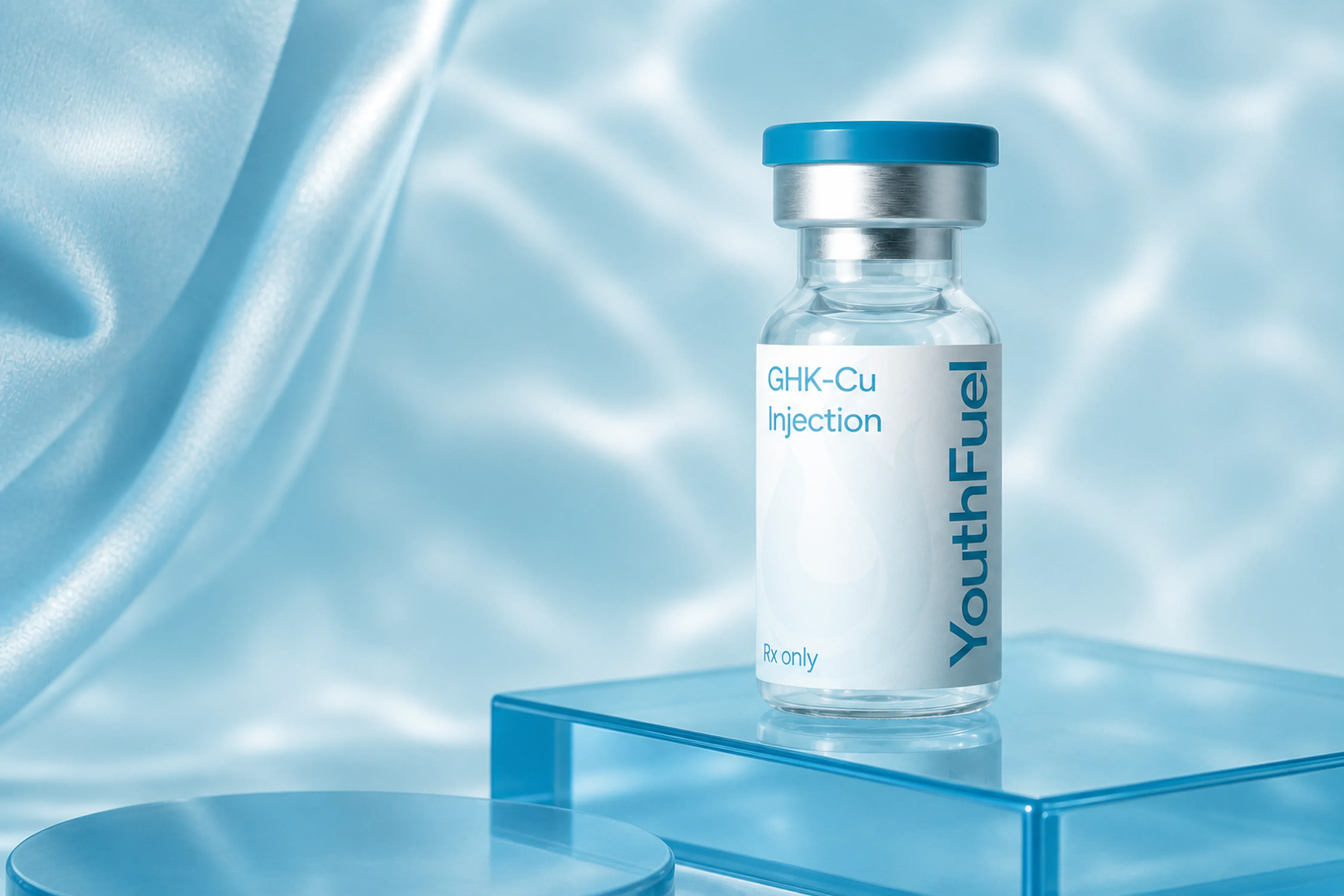
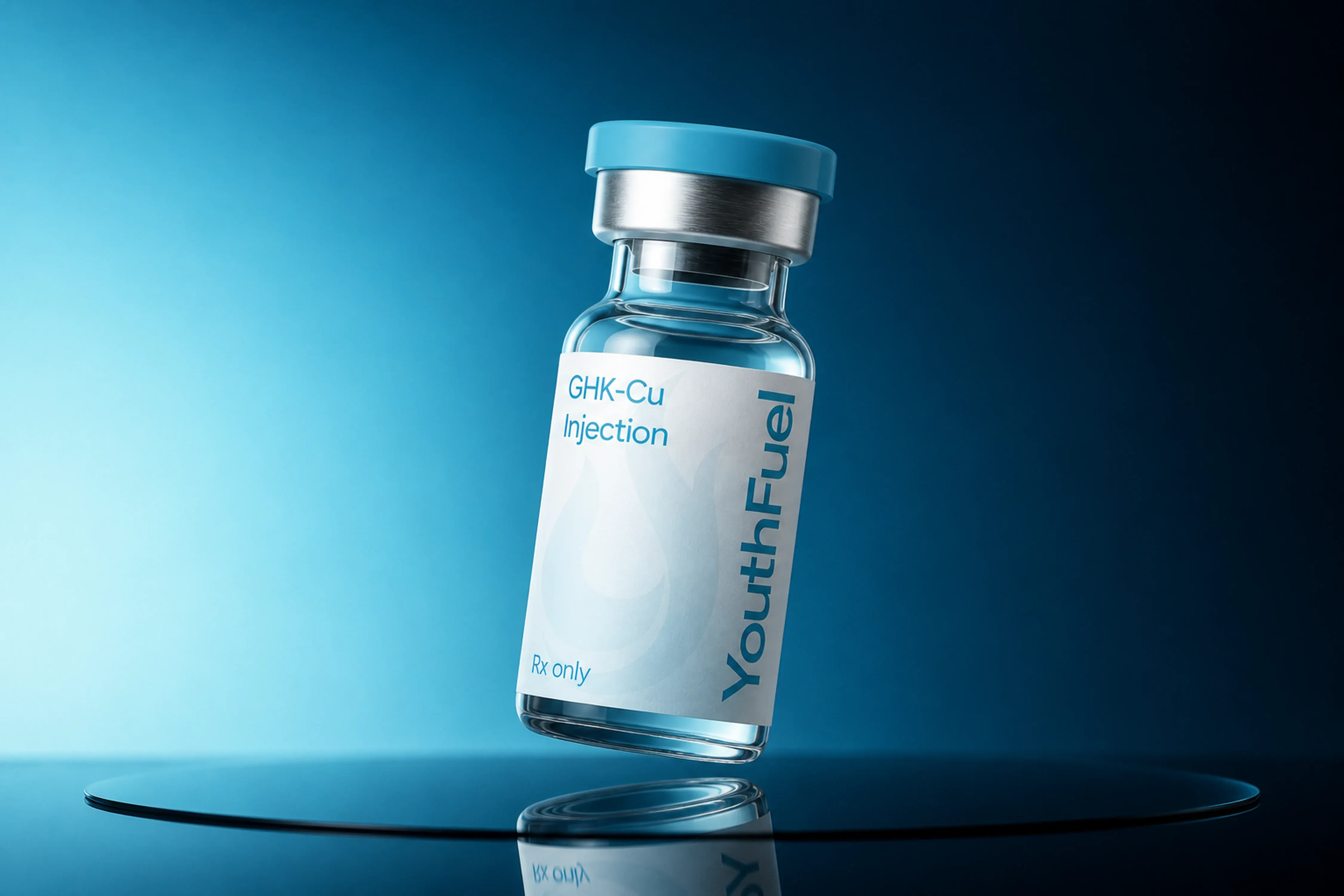
GHK-Cu is a naturally occurring copper-binding peptide studied in the context of tissue repair and skin health. Prescription only.
$329 every month
A licensed provider determines eligibility. Prescription treatment is not guaranteed.
Skin and tissue that repair slower than they used to.
Marks that linger. Recovery that takes its time.
The part that gets missed
A molecule you already make, in decline.
Several compounds in this category aren't foreign substances — they're things your body produces and produces less of over time. That framing matters, because it changes the question from “what is this” to “what happens as it falls.”
In plain language
What GHK-Cu actually is.
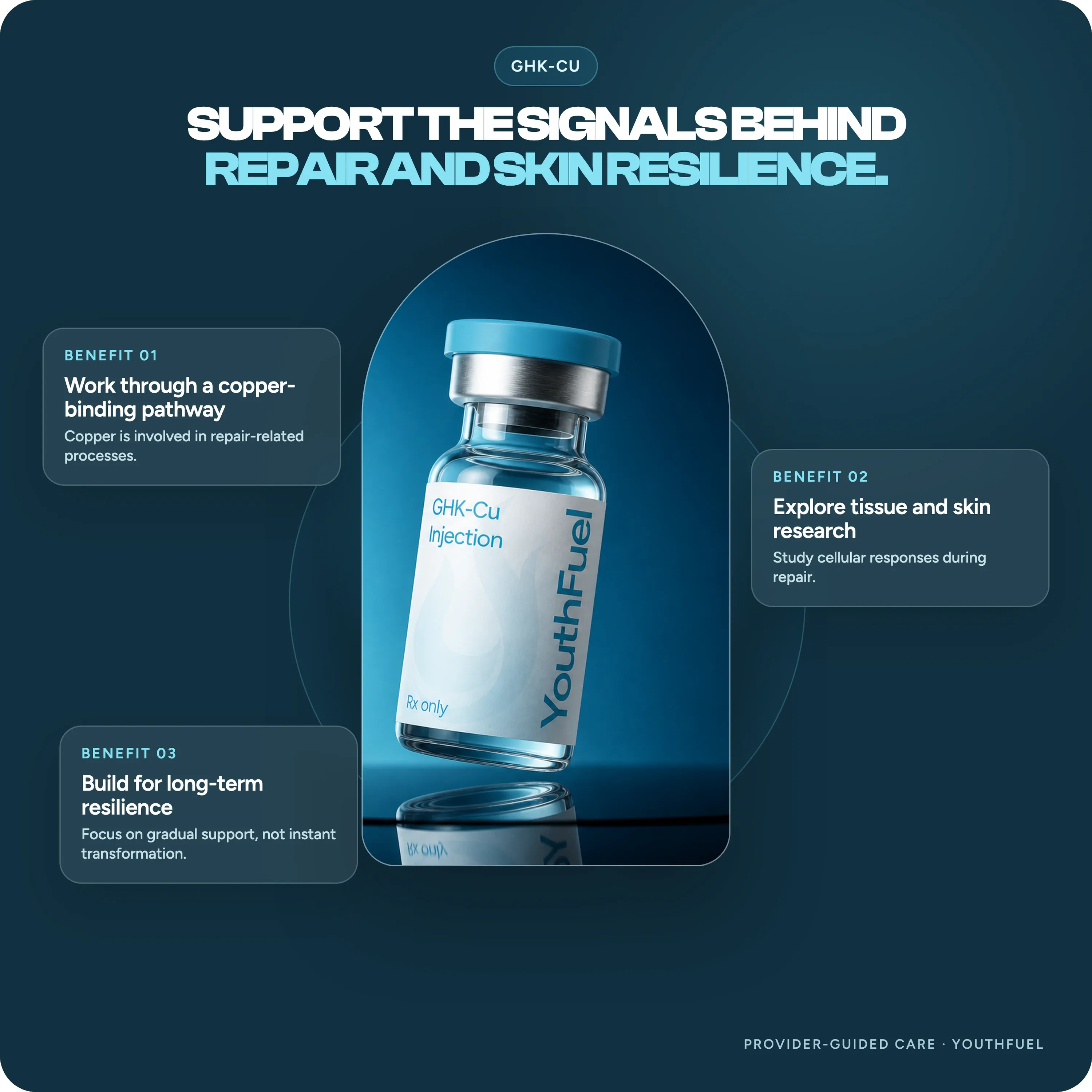
GHK is a chain of three amino acids found naturally in human plasma. It binds copper, and the resulting complex is what's meant by GHK-Cu.
It's been studied largely for its role in skin and connective tissue — signalling to the cells involved in remodelling and repair.
Its concentration in plasma falls substantially with age.
Why patients choose it
What you get with ghk-cu.
Copper-binding
Its activity is tied to how it carries copper.
Repair research
Studied in tissue-repair and skin contexts.
One-off or monthly
Available as a single order or an ongoing plan.
Why this time is different
Measured first. Then decided.
Why it didn't work before
Cosmetic marketing has made claims about this molecule that its evidence base does not support.
Almost everyone we see has been through the same loop: they described how they felt, someone treated the description, and nobody measured anything. When it didn't work, it looked like the treatment failed. Usually the treatment was never aimed at anything specific.
How this works instead
A provider decides whether it's appropriate, and you get the distinction between what's established and what's extrapolated.
So the order is reversed here. Bloodwork first, where it's warranted. A licensed provider in your state reads your numbers alongside your history and decides what — if anything — is appropriate. Then it gets measured again, and the plan moves when your numbers move.
Side by side
How this compares with the alternatives.
| YouthFuel | Typical online clinic | Primary care visit | |
|---|---|---|---|
| Price published before you start | Yes | No | No |
| Clinical eligibility required | Yes | Yes | Yes |
| Prescription not guaranteed | Yes | Yes | Yes |
“Typical online clinic” and “primary care visit” describe common patterns, not any specific provider. Your own experience of either may differ.
Day to day
How you actually take it.
A subcutaneous injection on the schedule your provider sets.
- Temporary irritation at the injection site is commonly reported.
- Rotate sites.
- Refrigerate reconstituted vials.
No surprises
What to confirm before proceeding.
- Whether the program has a consultation, assessment, or membership fee.
- When the first charge occurs and what happens if treatment is not prescribed.
- The renewal, pause, cancellation, and refund terms for the exact care path.
Lab, visit, medication, shipping, and monitoring inclusions depend on the care path and must be confirmed before purchase.
Plans
Current catalog pricing. Confirm the complete program before proceeding.
GHK-CU
$329
Billed every month
GHK-CU
$329
Billed once
A licensed provider determines eligibility. Prescription treatment is not guaranteed. Lab, visit, billing, and fulfillment details depend on the care path.
Start your assessmentFair questions
About ghk-cu.
How is this different from getting ghk-cu somewhere else?
Do I need lab work?
Do you take insurance?
What happens after I submit my assessment?
Start with your numbers.
A licensed provider determines eligibility. Prescription treatment is not guaranteed.