Peptides
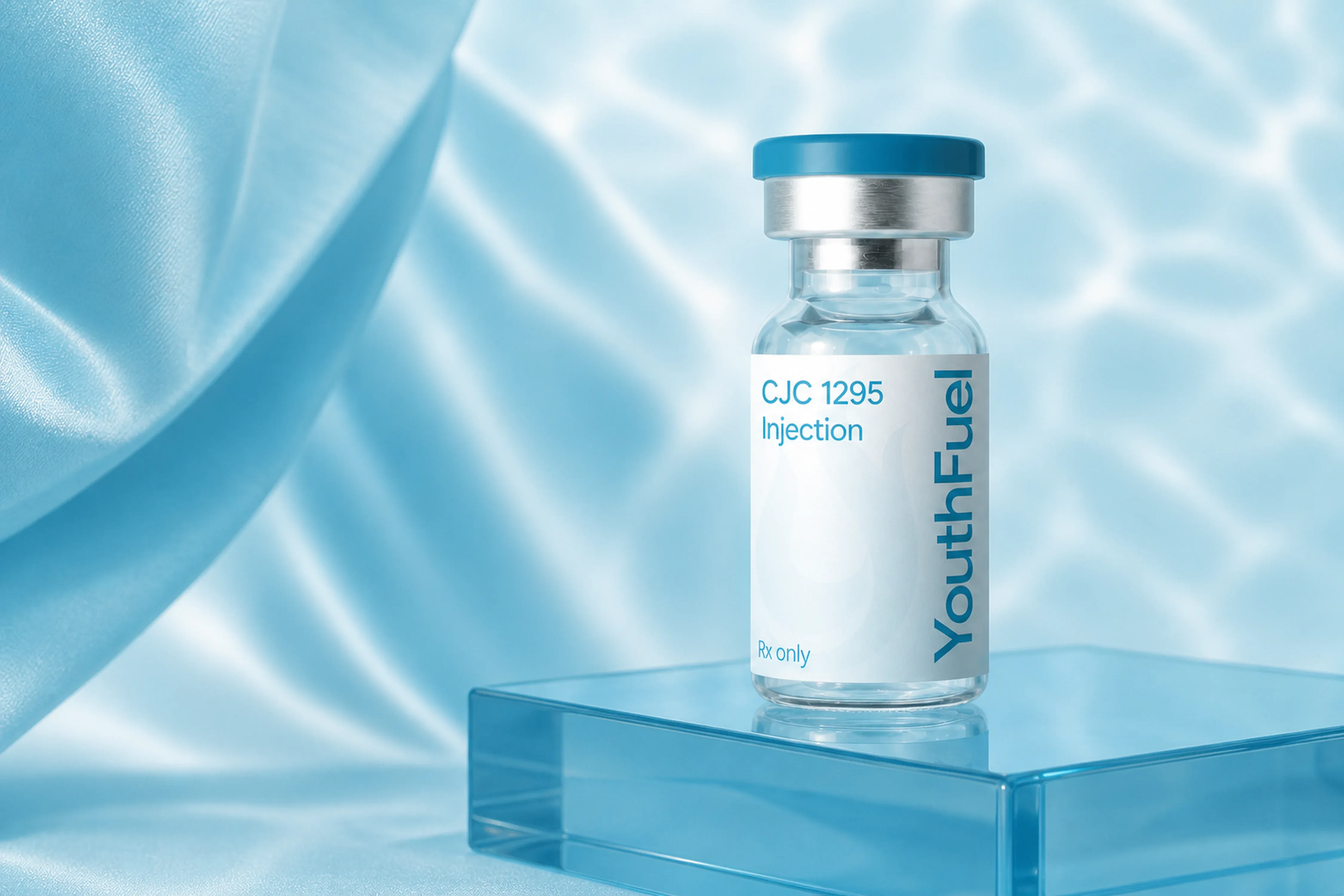
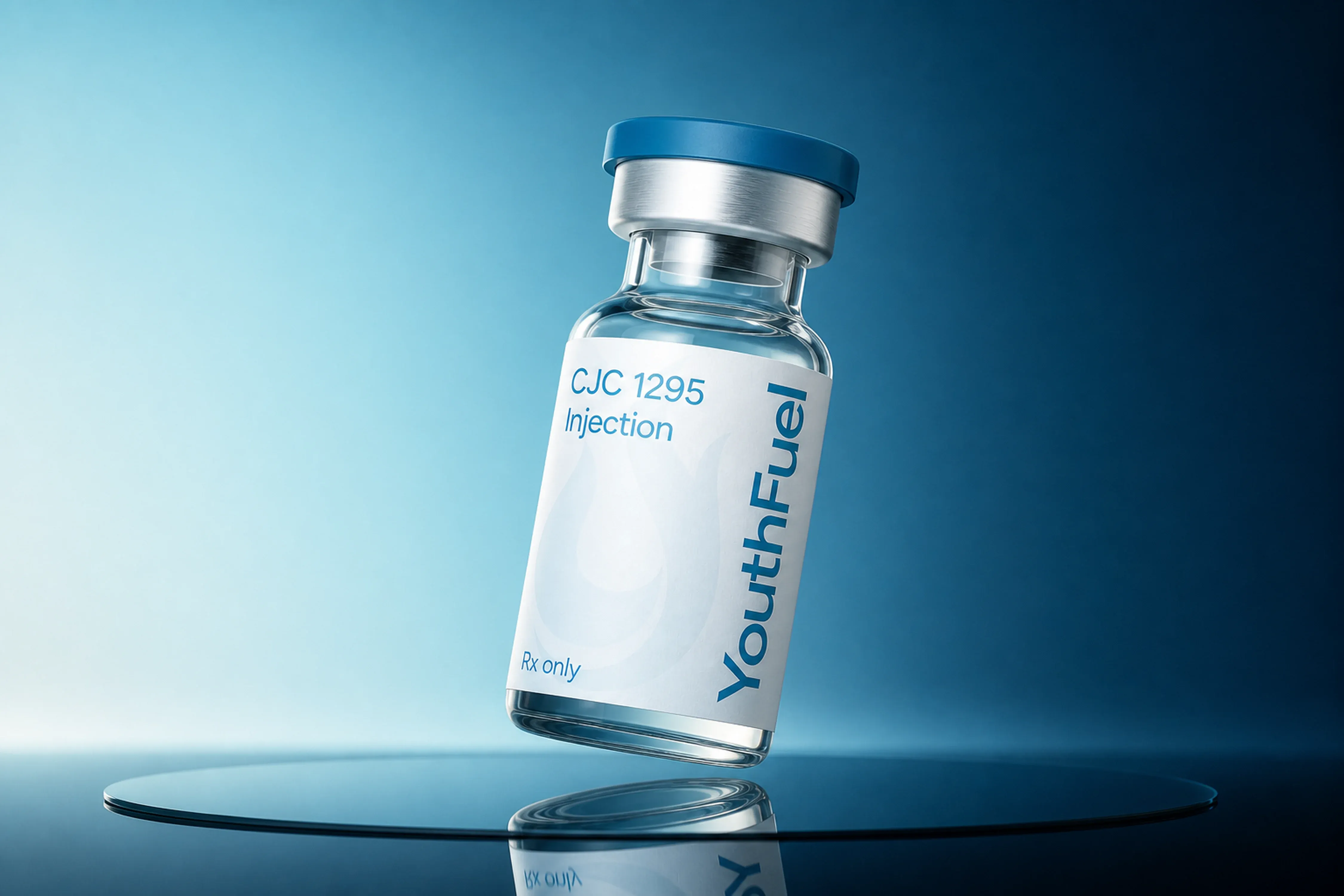
CJC 1295
A longer-acting growth-hormone peptide.
CJC 1295 acts on the growth-hormone-releasing pathway with a longer duration than sermorelin. Prescription only.
$329 once
A licensed provider determines eligibility. Prescription treatment is not guaranteed.
You want the same signal to last longer.
Nightly injections are a commitment, and the window they act in is short.
The part that gets missed
Same receptor. Different duration.
Within one class of peptide, the meaningful differences are usually how long the molecule survives in the body and how often it therefore has to be dosed. That's a practical distinction that changes what a protocol looks like day to day.
In plain language
What CJC-1295 actually is.
Like sermorelin, CJC-1295 is a GHRH analogue — it acts on the same pituitary receptor to prompt release of your own growth hormone.
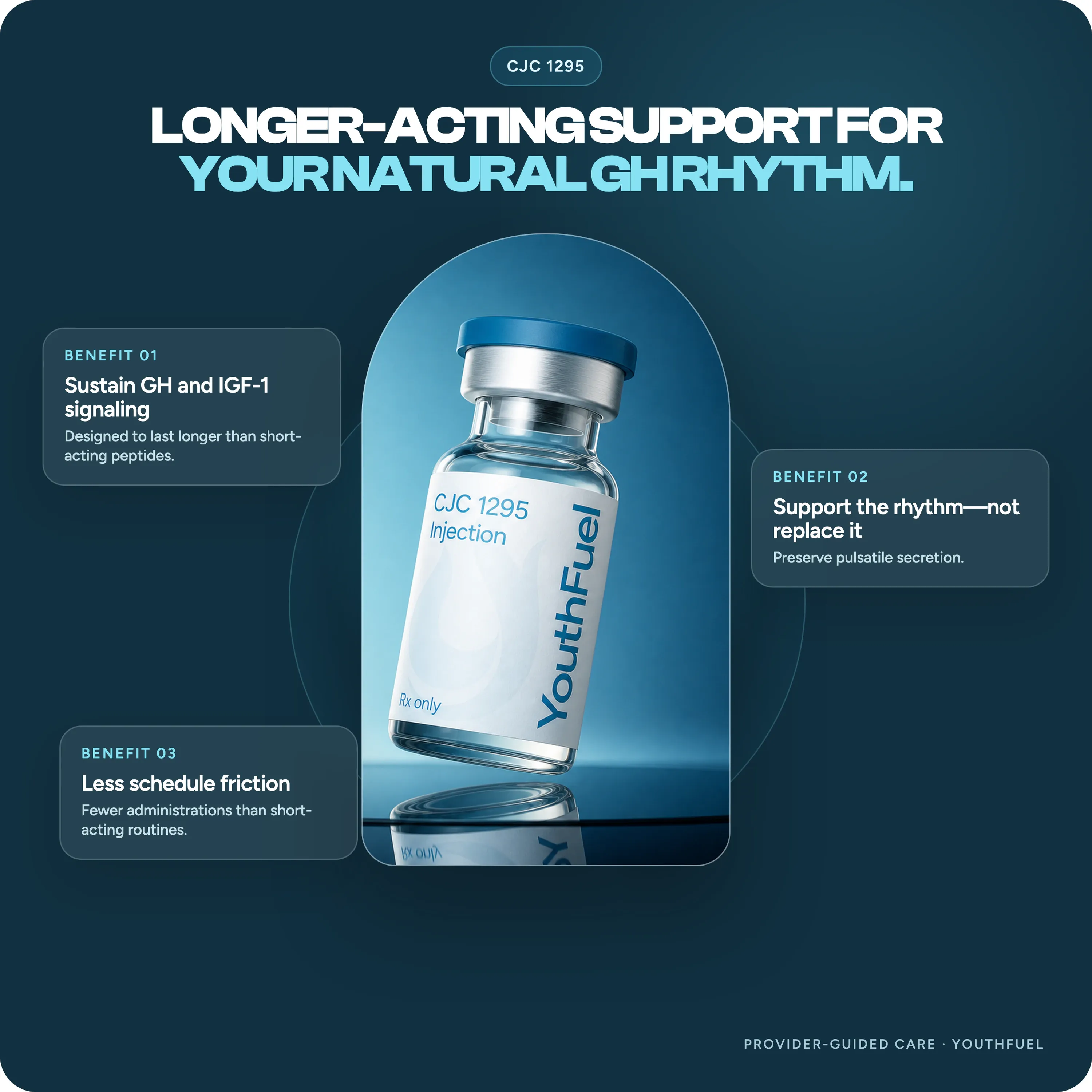
It is modified to resist the enzyme that clears the natural signal, so it persists longer than sermorelin does.
Longer persistence means fewer injections for the same intent.
Why patients choose it
What you get with cjc 1295.
Longer acting
Fewer administrations than shorter-acting peptides.
Often paired
Commonly discussed alongside other peptide protocols.
Provider directed
Your clinician decides whether it fits your goals.
Why this time is different
Measured first. Then decided.
Why it didn't work before
Peptides are sold online with confident claims and no prescriber, and the evidence base rarely gets mentioned.
Almost everyone we see has been through the same loop: they described how they felt, someone treated the description, and nobody measured anything. When it didn't work, it looked like the treatment failed. Usually the treatment was never aimed at anything specific.
How this works instead
It's prescription-only here, a provider decides whether it's appropriate, and the limits of what's known are stated rather than glossed.
So the order is reversed here. Bloodwork first, where it's warranted. A licensed provider in your state reads your numbers alongside your history and decides what — if anything — is appropriate. Then it gets measured again, and the plan moves when your numbers move.
Side by side
How this compares with the alternatives.
| YouthFuel | Typical online clinic | Primary care visit | |
|---|---|---|---|
| Price published before you start | Yes | No | No |
| Clinical eligibility required | Yes | Yes | Yes |
| Prescription not guaranteed | Yes | Yes | Yes |
“Typical online clinic” and “primary care visit” describe common patterns, not any specific provider. Your own experience of either may differ.
Day to day
How you actually take it.
A subcutaneous injection on the schedule your provider sets — less frequent than sermorelin.
- Timing and frequency are set individually; don't carry over a protocol from elsewhere.
- Reconstituted vials are refrigerated.
- Tell your provider about any other peptide you're taking.
No surprises
What to confirm before proceeding.
- Whether the program has a consultation, assessment, or membership fee.
- When the first charge occurs and what happens if treatment is not prescribed.
- The renewal, pause, cancellation, and refund terms for the exact care path.
Lab, visit, medication, shipping, and monitoring inclusions depend on the care path and must be confirmed before purchase.
Plans
Current catalog pricing. Confirm the complete program before proceeding.
CJC 1295 · One Time
$329
Billed once
CJC 1295 · Monthly
$329
Billed every month
A licensed provider determines eligibility. Prescription treatment is not guaranteed. Lab, visit, billing, and fulfillment details depend on the care path.
Start your assessmentFair questions
About cjc 1295.
How is this different from getting cjc 1295 somewhere else?
Do I need lab work?
Do you take insurance?
What happens after I submit my assessment?
Start with your numbers.
A licensed provider determines eligibility. Prescription treatment is not guaranteed.