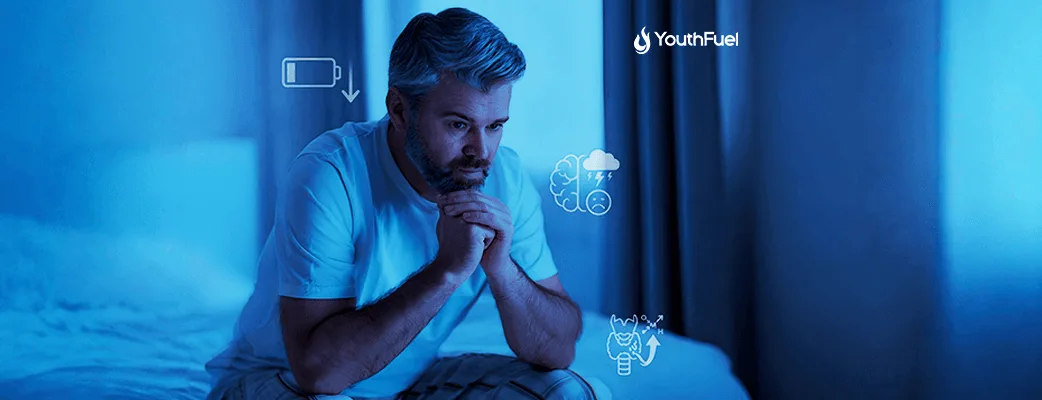
Signs of Low Testosterone: How to Know When It’s Time to Get Tested
Feeling “off” lately — less energetic, less motivated, not quite yourself? Many men quietly brush these changes aside, blaming stress, busy schedules or getting older. But in some cases, the root cause may be hormonal. Testosterone plays a central role in men’s physical health, mental clarity and emotional well-being, and when levels drop too low, the effects can ripple through daily life. The challenge is that low testosterone doesn’t always announce itself loudly — its signs are often subtle, gradual and easy to misinterpret. At YouthFuel, we’re here to cut through the noise and help you recognise what your body may be trying to tell you.
As men age — or sometimes even earlier — hormone levels can shift and drop, especially Testosterone (“T”). While some decline is natural, abnormally low testosterone can lead to serious health, mental and lifestyle issues. The tricky part: many symptoms are subtle or overlap with ordinary fatigue, stress or ageing.
At YouthFuel, we believe men deserve clarity, not confusion. Understanding the early signs of low testosterone empowers you to take control of your health before the symptoms begin to impact your lifestyle or relationships.
Common Symptoms and Warning Signs of Low Testosterone
Here are the most commonly reported signs associated with low testosterone:
-
Reduced libido (low sex drive) — A noticeable drop in interest in sex or intimacy is often among the first clues.
-
Erectile dysfunction or difficulty maintaining erections — Testosterone helps trigger the chemical processes needed for erections; when T drops, achieving or sustaining an erection may become harder.
-
Persistent fatigue, low energy, lack of stamina — If you’re constantly tired even after enough rest, and lack the energy you once had, it could point to low testosterone.
-
Loss of muscle mass or strength, muscle weakness — Testosterone helps build/maintain muscle. A drop in T might show up as shrinking muscles or difficulty maintaining gains despite regular activity.
-
Increased body fat, especially around the abdomen — Lower T can affect how your body stores fat; many men notice weight gain or changes in body composition.
-
Mood changes — irritability, low mood, depression, lack of motivation — Testosterone influences mood and mental well-being. Low T may contribute to anxiety, depression or a general sense of “something’s off.”
-
Cognitive issues — difficulty concentrating, memory problems, “brain fog” — Some men report reduced mental sharpness, focus issues or sluggish thinking when T levels are low.
-
Reduced bone density, bone weakness risk — Testosterone supports bone health; chronically low levels might raise the risk of bone thinning or osteoporosis.
-
Changes in hair growth or body hair — thinning facial/body hair, scalp hair loss — Hormonal shifts can disrupt hair growth cycles, sometimes leading to noticeable hair thinning.
-
Changes in testicular or genital size, or testicular softness — In some cases, low T can affect testicular volume or firmness.
It’s important to note: not everybody with low testosterone will show all these symptoms — and experiencing one or two doesn’t guarantee you have low T. But a combination of several, especially if they worsen or persist over time, may be a red flag.
When to Consider Getting Tested
You don’t need to test T levels just because you feel a bit tired or demotivated occasionally. But you should talk to a doctor and consider testing if:
-
Multiple symptoms from above persist — such as low libido + fatigue + muscle loss, or mood issues + cognitive troubles.
-
These symptoms interfere with your quality of life: personal relationships, work, self-confidence, physical health.
-
The changes happen even after correcting lifestyle factors (sleep, diet, exercise), and you’re not under unusual stress.
Most experts recommend a blood test taken early in the morning (preferably 7–10 AM) because testosterone levels fluctuate throughout the day.
If the first reading comes back low or borderline, a second early-morning test (on a different day) may be needed to confirm.
If both tests confirm low testosterone — and your symptoms align — a qualified healthcare provider can discuss options (monitoring, lifestyle changes, or in some cases, therapy).
Why You Shouldn’t Rush to Conclusions
Because many signs of low T overlap with lifestyle stress, poor sleep, aging, or other health problems, having just one symptom does not necessarily mean low testosterone.
Moreover, guidelines recommend careful evaluation before jumping into hormone therapy. For example, even if T levels are lower-than-average, therapy may not be recommended unless there are clearly concerning symptoms — especially in older men.
What You Can Do Now: Next Steps
-
If you recognise several of the symptoms above — especially sexual, physical and psychological — and they impact your daily life, consider reaching out to a qualified doctor or endocrinologist.
-
Request a morning total testosterone test (and possibly repeat it) to check your T levels reliably.
-
Meanwhile, focus on healthy lifestyle habits: balanced diet, regular exercise, adequate sleep, stress management and avoiding excess alcohol or smoking. These all support hormone balance.
-
Track and document your symptoms — libido, energy, mood, muscle strength, sleep — so you and your doctor have a clearer picture.
Take Charge of Your Hormonal Health with YouthFuel
Low testosterone can affect many aspects of life — from energy and physique to mood, mental clarity and sexual health. Because signs often overlap with normal ageing or lifestyle stress, the key is to be observant, honest, and proactive. If several warning signs are persistent and bothersome, it may well be time to get tested.
Early detection — and professional guidance — can help you make informed decisions about your health and well-being.
You don’t need to guess. You don’t need to wait.
And you definitely don’t need to keep feeling “not yourself.”
YouthFuel’s quick, confidential quiz helps you understand whether your symptoms may be linked to low testosterone — and whether you might benefit from a personalised treatment plan.
It only takes 2 minutes, and you get instant insight into your hormonal health.
Think you might have low testosterone?
Take the YouthFuel Testosterone Quiz today.
Get Started Now:$https://www.youth-fuel.com/testosterone/hrt-survey/$
This article is educational and is not medical advice. Treatment decisions are made with a licensed provider.